
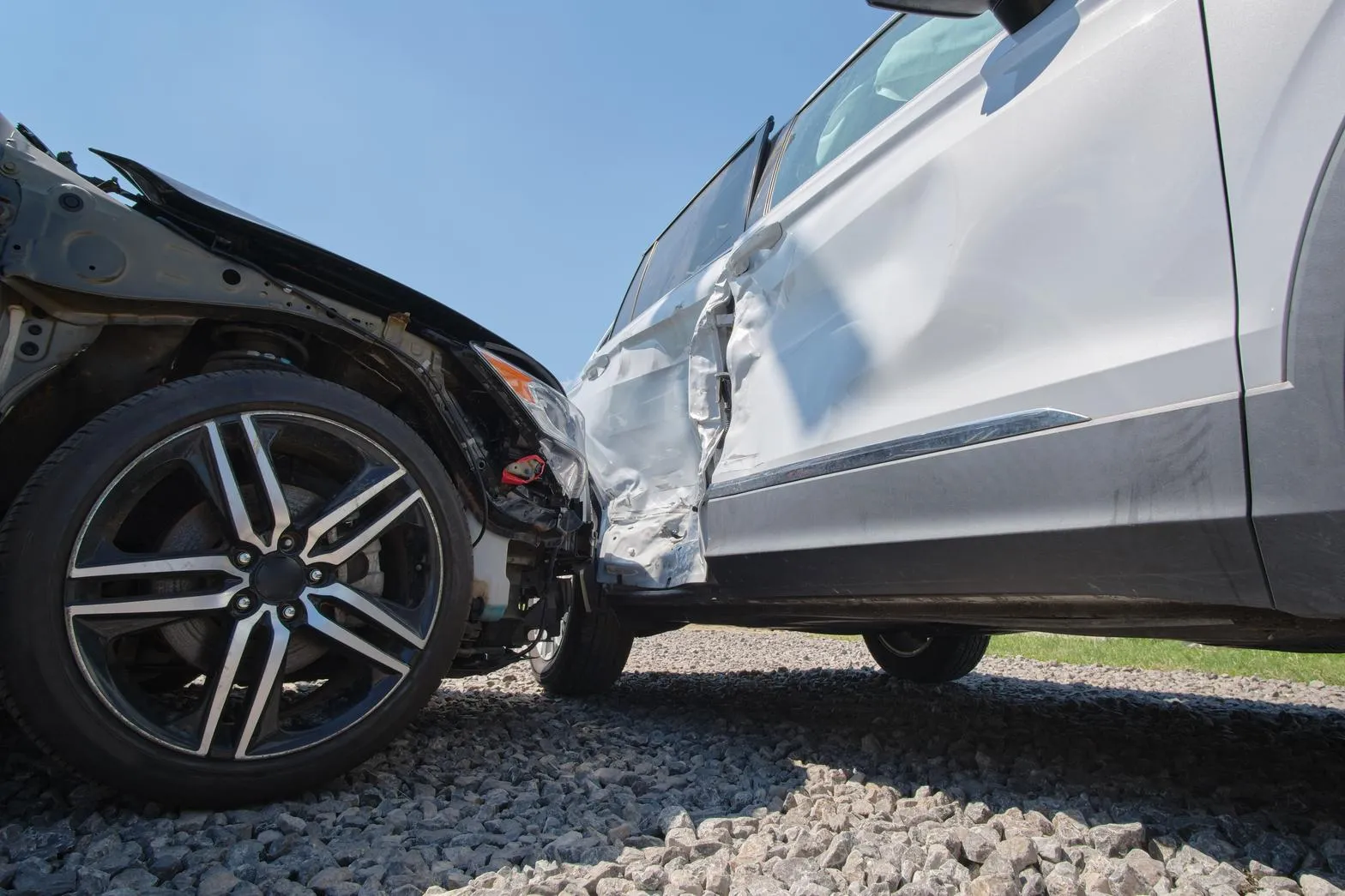
Diminished Value Claim Attorney for Vehicles Repaired After a Crash
A diminished value claim attorney recovers the market value your car, truck, or SUV lost because it now carries an accident history, even after a good repair. If another driver caused the crash, that loss is usually claimed against their insurer. Diminished Value Attorneys builds the evidence and handles the adjuster for owners in Iowa, Minnesota, Wisconsin, and Texas.
Repairs fix the damage. They do not fix the resale price. Insurers know this, and most would rather you never ask.
What is diminished value?
Diminished value is the drop in market value a vehicle suffers after a collision, measured once the repairs are done. Picture two SUVs with the same year, trim, and mileage. One has a clean history. The other has a reported accident and a body shop invoice. Buyers pay less for the second one, and the dealer offers less for it on trade. The gap between those two prices is diminished value.
Inherent vs. repair-related diminished value
Inherent diminished value
Inherent diminished value is the loss that remains after a proper repair. The vehicle looks right and drives right, but the accident sits on the history report and the market discounts it anyway. Most claims are built on inherent loss.
Repair-related diminished value
Repair-related diminished value is extra loss caused by poor or incomplete work: paint that does not match, uneven panel gaps, a part that was straightened when it should have been replaced. It stacks on top of the inherent loss and needs its own documentation.
Why does a perfect repair still lose value?
Because the market remembers the accident long after the body shop forgets it. Four things follow a repaired vehicle for as long as you own it:
The history report
If the accident was reported, it generally stays on Carfax or AutoCheck. Buyers see it before they ever see the car.
Evidence under the paint
Body filler, pinhole welds, hammer dimples, and heat-affected zones in the metal are permanent, and a dealer’s appraiser knows where to look.
Dealer and wholesale pricing
Trade-in offers drop for reported accidents, because the dealer expects to discount the vehicle again at resale.
The type of vehicle
Newer and low-mileage vehicles lose the most in dollars, along with luxury, performance, and specialty models and higher-value trucks and SUVs.
You do not have to sell the car to have a loss. The value dropped when the accident landed on the record. An adjuster who says otherwise is wrong.
What does the loss look like in dollars?
Here is an illustration using example figures, not a case result:
Nothing about that repair has to be wrong for the $5,500 gap to exist. It comes from the history, and it comes out of your pocket the day you trade in or sell. If someone else caused the crash, that is the loss you claim against their insurer.
Do you have a diminished value claim?
Most people start asking after an adjuster brushes them off or a trade-in offer comes in low. The answer turns on a handful of facts, and none of them require you to know insurance law.
The four-question profile
01
Does the vehicle have under roughly 100,000 miles? Lower mileage means a higher clean-history price, and a bigger gap once an accident is on the record.
02
Was the accident someone else’s fault? The strongest claims run against the at-fault driver’s insurer.
03
Is the vehicle less than about seven years old? Buyers of newer vehicles pay for a like-new history. An accident takes that away.
04
Did an insurance company pay for the repairs? Then an insurer is already involved and a repair file documents the damage. Both help.
Four yeses put you squarely in the profile. One “no” changes the math without always ending the conversation; a fully loaded truck just past the age line can still carry a loss worth chasing. And if the honest answer is that there is no recoverable loss, you will hear it at the evaluation, not months into a dispute.
Third-party vs. first-party claims
A third-party claim goes against the at-fault driver’s liability insurer. This is the usual route. You are asking the company that insures the person who caused the crash to pay for the loss that driver caused.
First-party claims, made under your own collision coverage, are harder. Many personal auto policies do not pay diminished value on a collision claim. In Texas, the state’s highest court has held that under the standard Texas personal auto policy, an insurer that elects to repair does not owe diminished value on a first-party claim when the repairs adequately restore the vehicle. Policies differ, so have a lawyer read yours before you write it off.
What if you were partly at fault?
You may still have a claim. In each state we serve, your recovery is generally reduced by your share of the fault, and past a certain point it is barred. Iowa bars you if your fault is greater than the combined fault of the others. Minnesota and Wisconsin let you recover as long as your fault is not greater than the other party’s. Texas cuts you off if you are more than 50% responsible.
How is diminished value measured?
There are two ways to put a number on the loss. Insurers tend to prefer the one that produces the smaller number.
Market evidence
This method asks the market two things: what a buyer would have paid for your vehicle with a clean history the day before the crash, and what a buyer will pay for it now. The answer comes from real comparable vehicles, dealer trade-in offers, and how the accident shows up on the history report. It takes work, and it is the method we use.
Formula
Carriers usually reach for a formula instead, most often some version of 17c. It is fast, it rarely looks at a single real sale, and it produces a number the adjuster can defend inside the company. How closely that number matches what your vehicle would bring on a dealer lot is a question the formula never asks.
What is the 17c formula, and why does it undervalue your claim?
The 17c formula traces back to a 2001 Georgia case, and insurers have leaned on it ever since, well outside Georgia. It works in three steps:
| Step | What the formula does |
|---|---|
| 1 | Takes the vehicle’s pre-loss value and caps the base loss at 10% of it |
| 2 | Multiplies the base loss by a damage modifier |
| 3 | Multiplies that result by a mileage modifier |
Here are the damage modifiers:
| Damage level | Modifier |
|---|---|
| Severe structural damage | 1.00 |
| Major damage to structure and panels | 0.75 |
| Moderate damage | 0.50 |
| Minor damage | 0.25 |
| No structural damage | 0.00 |
And the mileage modifiers:
| Mileage | Modifier |
|---|---|
| 0 miles | 1.0 |
| 20,000 miles | 0.8 |
| 40,000 miles | 0.6 |
| 60,000 miles | 0.4 |
| 80,000 miles | 0.2 |
| 100,000 miles or more | 0.0 |
Run the illustrative vehicle through it. A $28,000 pre-loss value caps the base loss at $2,800 before either modifier touches it. Call the damage moderate (0.50) and put 20,000 miles on the odometer (0.8), and the formula lands at $1,120. The market example showed a $5,500 loss. Same car, same crash, and 17c finds about a fifth of it.
Where 17c goes wrong
The 10% cap is arbitrary
It sets a ceiling before anyone checks what the market actually did.
Stigma gets ignored
A reported accident scares buyers whether or not the frame was touched, yet 17c scores non-structural damage at zero.
Mileage wipes out the claim
At 100,000 miles the loss disappears on paper, no matter the vehicle or how well it was kept.
Real comparables never enter the math
The formula starts from pre-loss value, not from what vehicles like yours actually sell for.
17c is an insurance industry method, not a study of your local market. Treat it as the insurer’s opening position dressed up as arithmetic. You do not have to accept its number.
What makes a diminished value appraisal hold up?
A diminished value appraisal estimates how much market value your vehicle lost because of its accident history. Anyone can put a figure at the bottom of a page. The adjuster’s first question is where it came from, and if the answer is thin, so is the offer.
What credible evidence includes
Pre-loss value
What the vehicle was worth the day before the crash, based on trim, options, mileage, and condition.
Market comparables
Vehicles like yours, for sale or recently sold, with and without accident history. Weak comparables are easy to wave off, so they have to be chosen carefully.
The full repair file
The estimate, every supplement, the final invoice, the parts list, and the photos. It often contradicts an adjuster’s “minor damage” label.
History report impact
How the accident appears on Carfax or AutoCheck, and what that does to buyer interest.
Dealer trade-in evidence
A written offer from a dealer is hard for an insurer to argue with, since dealers set the prices. You do not have to accept it for it to count.
Repair problems
Photos and a written inspection of anything the shop got wrong.
Why a report is not a claim
An appraisal is evidence. A claim is a demand made to a specific insurance company, backed by that evidence and pursued until it is resolved. Adjusters see plenty of one-page reports with a large number and little behind it, and they set those aside and run 17c instead. Even a solid report does nothing if nobody follows up when the carrier ignores it.
Appraisal service or attorney?
| Appraisal service | Diminished Value Attorneys | |
|---|---|---|
| What you get | A valuation report | A claim evaluation, an evidence file, and representation through resolution |
| Who talks to the adjuster | You | We do |
| When the carrier counters with 17c | You argue it alone | We answer it with comparables and the repair file |
| If the carrier denies or will not pay | The service is finished | We advise you on legal options, including court |
| Deadline tracking | Not included | Part of the work from day one |
Appraisal services sell a report and leave you to argue with the adjuster. We bring value, beginning to end. Already paid for an appraisal? Send it over, and we will tell you if it holds up.
How do insurers push back, and how do we respond?
Most people have never handled a diminished value claim before. The adjuster handles property claims every day, and that imbalance favors the insurer. These are the moves we see most often:
01
The lowball first offer. A carrier may open well below what the evidence supports and wait to see if you take it. We respond with a written demand where the dollar figure follows from the evidence.
02
A 17c number presented as the market. We answer with the comparables and trade-in offers that show what vehicles like yours actually bring.
03
“Diminished value does not apply to you.” Sometimes true on a first-party claim under your own policy. On a claim against the at-fault driver’s insurer, it deserves a hard second look. We ask for the basis in writing and answer it.
04
“You have to sell the car first.” No. The loss exists when the value drops.
05
Delay. Slow callbacks, requests for documents you already sent, a new adjuster every few weeks. Weeks turn into months if nobody pushes. We keep the file moving and the dates in view.
A former claims insider on your side

Chris Martineau
Attorney
Before he became a lawyer, Chris Martineau worked in the property claims department of a major insurance carrier. He has seen these files from the other side of the desk. Whether the carrier is arguing 17c or a policy exclusion, he knows how carriers think. He is also a trial attorney with more than two decades of experience, handling cases from small claims court up to catastrophic injury and death, and he holds licensure in multiple states.

Chris Johnston
Attorney
Chris Johnston, who manages the diminished value practice, has more than 25 years of legal experience, mostly in personal injury. Over those years he kept meeting people whose repaired cars had lost value and who had been told, incorrectly, that they “don’t have a diminished value claim.” Frustrated by the lack of candor from carriers, he started this practice at Johnston | Martineau, PLLC. In his words: “Insurance companies rarely tell you about diminished value, but I do.” Read more about both attorneys on our About page.
Before you talk to the adjuster again
- Keep every letter, email, and text from the insurer, and log the date and adjuster’s name for each call.
- Hold off on signing any release or settlement paperwork until a lawyer has read it.
- Have someone check any offer against the evidence before you accept it.
Why do luxury and high-value vehicles lose the most?
When the market marks a vehicle down for its accident history, the markdown comes off a bigger price. Luxury car diminished value runs higher in dollars for that reason alone. Then add the buyer: someone shopping for a nearly new luxury sedan or a loaded pickup has options, pulls the history report, and pays for “like new.” An accident history is the one thing that makes it not like new.
Luxury vehicles
Buyers expect a documented history and nothing to explain at resale. The repair can be perfect and the price still falls.
Performance and enthusiast cars
These buyers ask about original paint, factory panels, and whether the structure was ever touched. They know where to look for pinhole welds.
Electric vehicles
EV buyers worry about what they cannot see. After a collision, that list includes the battery and the systems around it, even when the repair was done correctly.
Higher-value trucks and SUVs
A well-equipped truck or SUV can cost as much as a luxury car, and people who tow or haul with one get wary of any reported frame damage.
Specialty vehicles
Limited editions and heavily optioned builds sell to a smaller pool of buyers. A reported accident shrinks that pool further.
Every weakness in 17c gets more expensive as the vehicle gets nicer. A 10% cap cannot see a discount bigger than a tenth of the value, and premium buyers discount accidents the formula scores at zero. So the evidence on a high-value claim has to be tighter: comparables from the same segment, a pre-loss value that accounts for packages and options, the full repair file including any calibrations, and trade-in offers from dealers who sell that kind of vehicle.
What if your diminished value claim was denied?
Having a diminished value claim denied is frustrating, but a denial letter is the insurer’s position, not a court ruling. Some denial reasons are real. Plenty are not. A diminished value attorney can tell you which kind you are holding.
Denial reasons that often do not hold up
- “Our formula shows no loss.” Usually 17c zeroing out your vehicle for mileage or for damage it does not call structural.
- “The repairs restored your vehicle.” A good repair does not erase the accident from the history report. The stigma left after a proper repair is exactly what inherent diminished value is.
- “You have to sell the car first.” You do not.
- “We never received timely notice.” An insurer’s internal notice timeline is not the legal deadline. Have a lawyer check both.
Denial reasons that may be real
- You were at fault, or mostly at fault. The state fault rules described above decide how much, if anything, you can recover.
- A first-party policy exclusion. Texas’s highest court has held that under the standard Texas personal auto policy, an insurer that elects to repair does not owe diminished value on a first-party claim when repairs adequately restore the vehicle. Many policies in other states also decline to pay it on a first-party collision claim.
- The legal deadline has actually passed. If it has, the claim is likely over.
- There is no real loss. Some older, high-mileage vehicles with light repairs do not lose much value. If the evidence says that about yours, we will say so.
What to do next
Get the denial in writing
A vague phone call is hard to answer.
Check which insurer said no
If your own carrier denied a first-party claim, a third-party claim against the at-fault driver’s insurer is a separate claim against a different company, and it may still be open.
Gather the file
Repair estimate and invoice, photos, the claim number, and every letter from the insurer.
Get a second look
A free claim evaluation includes a review of the denial letter.
Move on these steps soon after the denial arrives. Insurers often set internal notice timelines that run shorter than the legal deadline, and a slow response gives them one more argument.
Legal options when a carrier will not pay
Depending on the state and the amount at stake, options can include a renewed demand backed by documented evidence, small claims court, or a lawsuit. Minnesota’s conciliation court handles claims up to $20,000. Iowa and Wisconsin have small claims courts, and Texas uses justice courts for smaller claims. Larger cases go to courts such as Polk County District Court, Hennepin or Ramsey County District Court, Milwaukee or Dane County Circuit Court, or the courts in Dallas, Tarrant, and Collin counties.
We will not promise a lawsuit or an outcome. You get a straight read on the realistic choices from lawyers who know what court actually looks like, and then you decide.
How long do you have to file a diminished value claim?
Each state sets its own deadline for property damage claims, and missing it can end your claim for good. These are the general deadlines in the four states we serve:
| State | General deadline | Phone line |
|---|---|---|
| Iowa | 5 years | 515-337-9760 |
| Minnesota | 6 years | 612-383-1377 |
| Wisconsin | 3 years for vehicle damage from a motor vehicle accident | 414-401-7320 |
| Texas | 2 years | 972-338-4070 |
Texas gives you the least time of the four, so owners there should move quickly. Wisconsin is next at three years, which is shorter than many drivers assume. In every state, insurers often set their own internal notice timelines that run shorter than the legal deadline. Those timelines are not the law, but ignoring them hands the adjuster an easy argument. See every market we cover on our locations page.
How does working with a diminished value claim attorney work?
Tell us about the vehicle
Year, make, model, mileage, and what happened. Send the repair paperwork if you have it.
We evaluate the claim
Fault, coverage, timing, and whether the numbers justify going forward. If they do not, we say so.
We build the evidence
Valuation work, repair documentation, and market comparables, assembled into a written demand.
We handle the carrier
The adjuster deals with us, not you.
You recover the value
If the carrier refuses to pay, we talk through your legal options with you.
A good diminished value claim attorney should spend the first conversation figuring out if you have a case at all, not selling you on one.
Frequently asked questions about diminished value claims
Talk to a diminished value lawyer about your vehicle
Call the line for your state or request a free claim evaluation. We are available Monday to Friday, 8 AM to 5 PM, and on weekends by appointment.
Prefer to talk it through? Call the line for your state, or email cjohnston@jmlegal.com.