
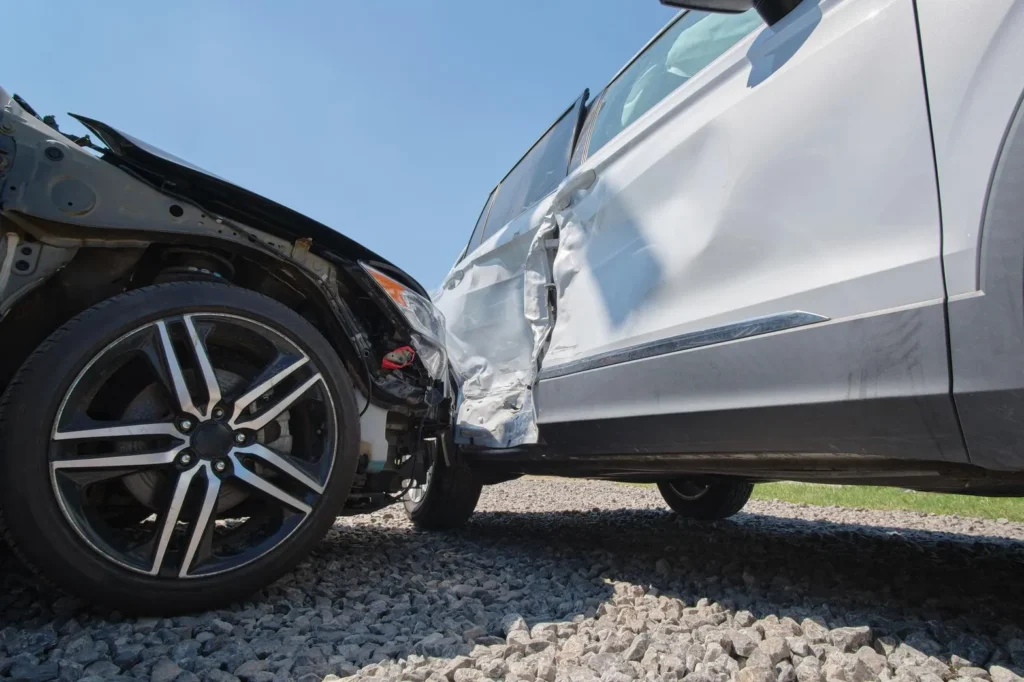
You did everything right. The car went to a good shop, the paint matches, and it drives the way it did before. Then you asked the other driver’s insurance company about diminished value, and the number they came back with barely covers a car payment.
That number probably didn’t come from looking at your car. It came from a formula.
What the 17c formula is
A lot of adjusters calculate diminished value with something called the 17c formula. It traces back to a Georgia class action against State Farm in the early 2000s. It was never meant to be a national standard, but adjusters across the country still lean on it.
Here’s how it works:
- Start with the car’s market value before the accident.
- Cap the loss at 10% of that value. That’s the most the formula will ever pay.
- Multiply by a damage score, from 1.00 for severe structural damage down to 0.00 for no structural damage.
- Multiply by a mileage score, from 1.00 under 20,000 miles down to 0.00 at 100,000 miles or more.
Run the numbers on an example
Say you drive a 2023 SUV worth $60,000 before the crash. It has 25,000 miles on it, and the repairs involved moderate damage to the structure and panels. (This is a hypothetical, but it’s a common one.)
- 10% of $60,000 = $6,000
- Moderate damage multiplier (0.50) = $3,000
- Mileage multiplier for 20,000 to 39,999 miles (0.80) = $2,400
So the formula says your $60,000 SUV lost $2,400 in value.
Now picture trading it in. The dealer pulls the vehicle history report, sees a reported accident with structural repairs, and adjusts the offer. Or picture selling it yourself and fielding calls from buyers who ask about the accident before they ask about the price. In a lot of cases, $2,400 doesn’t come close.
Where the formula falls short
The 10% cap is arbitrary. Nothing in the used car market says a repaired vehicle can only lose 10% of its value. The cap came out of the Georgia case, not from a study of what buyers actually pay.
The damage score wipes out real loss. If the damage wasn’t structural, or if parts were replaced instead of repaired, the formula can drop the claim to zero. A buyer reading a history report doesn’t see that distinction. They see “accident reported.”
The mileage score punishes normal driving. At 45,000 miles, the formula has already cut your claim by 40% before anyone looks at the car.
It ignores the car itself. Make, model, trim, demand, and how buyers in your area treat accident history never enter the math. A low-volume luxury car and a high-volume commuter car get run through the same multipliers.
What a fair number is based on
A stronger claim is built on evidence about your vehicle, not a formula. That usually means:
- An independent appraisal comparing the car’s value before the accident with its value after repairs
- The repair estimate and final invoice, with photos and a list of any structural work
- Market data on what similar vehicles sell for with and without accident history
- The vehicle history report, since that’s what the next buyer will see
The insurance company doesn’t have to accept your appraisal. That’s where negotiation comes in, and where an attorney can push back on a low offer with evidence the adjuster has to answer.
Ask how they got the number
If an adjuster gives you a diminished value figure, ask how it was calculated. If the answer involves a 10% base, a damage multiplier, and a mileage multiplier, you’re looking at the 17c formula. That doesn’t mean your claim is small. It means the insurer used a method that’s built to keep it small.
Most diminished value claims are made against the at-fault driver’s insurance company, and every state sets its own deadline for filing. Waiting can cost you options.
Talk to Diminished Value Attorneys
Our attorneys handle diminished value claims for drivers in Iowa, Minnesota, Wisconsin, and Texas. Before you accept an offer or sign a release, reach out and let us take a look at your claim.
Iowa: 515-337-9760 | Minnesota: 612-383-1377 | Wisconsin: 414-401-7320 | Texas: 972-338-4070
This post is for general information only and is not legal advice.
-

The Diminished Value Attorneys Skilled Trades Scholarship
There’s an old saying that a lot of folks in crisp, white-collar offices have forgotten: Work is not a four-letter word. Every single day, millions of people get up, put on boots, and do the heavy lifting that keeps this country moving. They are the mechanics, the technicians, and the artisans of the skilled trades…. -

Why Diminished Value Hits Luxury and Late-Model Cars the Hardest
If you’ve put real money into a vehicle, a crash costs you more than the repair bill shows. A good shop can make the car look new again. It can’t take the accident off the car’s history, and the more the car is worth, the more that history costs you. Diminished value is the drop in a car’s resale value because it now has an accident on its record, even after quality repairs. Buyers pay less for a car that’s been wrecked. That’s true for every vehicle on the road.